
How to build a running shoe rotation
Why different shoes can help, how many pairs you might actually want, and how one week could look.
Published
A running shoe rotation means owning more than one pair of running shoes and choosing between them depending on the run. That might be two similar pairs you alternate, or a cushioned shoe for recovery miles and a lighter one for faster sessions.
You don't need one to run well. A single versatile shoe is a perfectly good starting point. Extra pairs start to earn their place when your running asks for different things: quicker sessions, longer runs, wetter weather or rougher ground.
If your runs all ask much the same of a shoe, start with one versatile pair. If a particular session or surface feels poorly served, that is the first job for a second pair. The two-shoe and four-shoe weeks below show how much choice extra pairs add without changing the training.
Why different shoes can be useful
Running shoes are built around trade-offs. A shoe that feels soft and forgiving at a relaxed jog can feel a little flat when you speed up, and a light, snappy shoe can feel sparse two hours into a long run. Having a choice lets you match the shoe to the job.
- Feel. You may prefer a cushioned shoe for slow miles and something lighter or more responsive for faster running. A different pair gives you that choice, with a feel that suits the effort.
- Grip. Road outsoles are designed for tarmac. Mud, wet grass and loose rock call for different rubber and lugs.
- Comfort over time. Cushioning, fit and lockdown matter more the longer you're out. What feels fine for 5km can feel quite different at 25km.
- Time to dry. If you run often, especially in the rain, a second pair means you're not pulling on damp shoes.
- Enjoyment. Saving a favourite pair for workouts or trying a different feel can make a familiar week more interesting. If that appeals and the cost fits your budget, it's a valid personal reason to rotate.
What the research says
The study most often quoted is by Malisoux and colleagues, who followed 264 recreational runners for 22 weeks. Runners who used more than one pair in parallel had a lower risk of running injury than those who stuck to one. It was an observational study rather than a randomised trial, so it shows an association, not proof that rotating shoes prevents injuries. Other habits could explain part of the difference.
For wider context, a 2022 Cochrane review found that evidence linking shoe types to injury is mostly low or very low certainty, and it didn't look at rotation directly.
Foam is the other reason people give. In a 2020 lab study, Allen and colleagues mechanically tested five shoes of one entry-level EVA model. Three received 22-hour rests after each simulated 20km and temporarily absorbed more energy when testing resumed. That suggests foam does recover between uses, at least under those conditions. It doesn't tell us how modern PEBA or TPU foams and newer constructions behave, or that alternating adds a fixed number of miles.
If you own a second pair anyway, you can give one time to dry and rest while using the other. The research above does not establish a universal 24-48-hour waiting rule, or show that consecutive-day use is automatically harmful.
How mileage, frequency and session mix change things
Weekly mileage affects how much use your shoes get, but the studies cited here do not establish mileage cutoffs for needing a second or third pair. Frequency, surfaces and the kinds of runs you do also change the decision:
- How often each pair is used. Five runs a week in one pair leaves less time for it to dry out between runs.
- How fast shoes wear. More miles means more frequent replacements, and a second pair already broken in makes the changeover easier.
- What sessions you're doing. Higher mileage often brings more variety, such as a workout or a long run, though not always.
A few illustrative scenarios show why the mix matters as much as the total. These are examples to think with, not thresholds or injury limits.
- 20km a week over three similar recovery road runs: one shoe may well be enough.
- 40km over five runs, including a weekly workout: a second, lighter pair may add useful contrast.
- 60km a week, all recovery road running: one versatile daily trainer can still do the job, though a similar spare to alternate could be handy.
- 25km split between road and technical trail: two pairs may make sense even at lower mileage, because the ground asks for different grip.
What different sessions ask of a shoe
Recovery runs
For recovery runs, look for cushioning you like, a secure fit and a ride that feels settled at a relaxed pace. Here, recovery means relaxed running, the same session category used in Cinda. A shoe marketed for recovery does not treat fatigue or guarantee faster recovery.
Long runs
Over longer distances, small fit issues grow. Lockdown, cushioning that stays comfortable and a shape that suits your foot matter most. A slow long run and one with marathon-pace sections may suit different shoes.
Workouts
For intervals, tempo runs and hill reps, some runners prefer a lighter, more responsive shoe. Others are happy in their daily trainer. A dedicated race shoe is optional, not a step everyone needs to take.
Trail
Trail shoes vary as much as trails do. No single outsole handles everything: deeper lugs suit mud and soft ground, while shallower lugs and stickier rubber tend to suit hard-packed paths and rock. A fit that holds your foot steady on uneven ground matters as much as the grip.
Start with one shoe
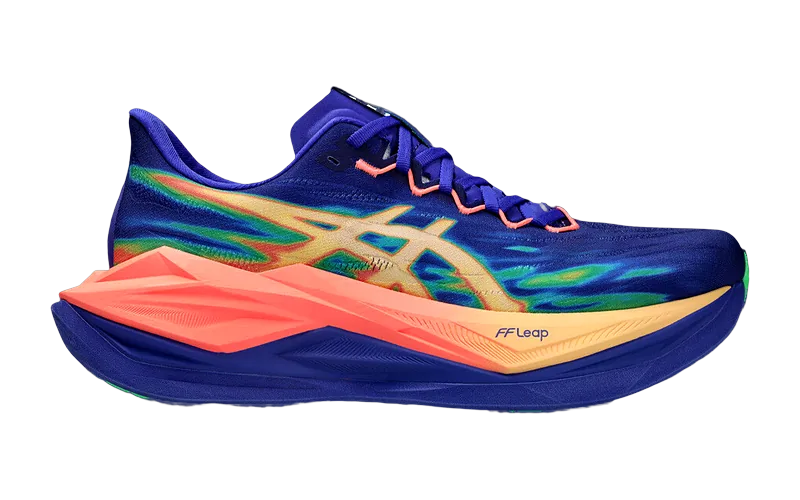
If you're buying one pair, look for a versatile daily trainer: comfortable at a relaxed pace, happy to pick up speed and suited to the ground you run on most. For many road runners, that covers everything.
Some choose a super trainer instead. The term loosely describes a premium, higher-cushion shoe with an advanced foam, designed to handle recovery miles and quicker running in one. It isn't a regulated category, and it isn't automatically better value than a good daily trainer.
The ASICS Superblast 3 is one worth considering for broad road use. ASICS says its FF LEAP foam is influenced by its racing models while being made for everyday running. As with any shoe, fit, how it feels at a relaxed pace and how it responds in workouts matter more than the label.
When a second or third pair adds value
Add a pair when you can name the job it will do. Common reasons:
- One type of run keeps feeling wrong in your main shoe, such as workouts feeling sluggish or long runs feeling harsh.
- You've started running off-road and need different grip.
- You run often in wet conditions and want time for shoes to dry.
- Your main pair is wearing out and you'd like a new one broken in before the switch.
The shoes don't have to be different. Two similar pairs can overlap and still be useful to alternate. Each extra pair adds choice and cost, and there's no obligation to own a shoe for every session.
The same six-run week, with two or four shoes
To see what extra pairs change, keep the running exactly the same. Both examples below have recovery runs on Tuesday, Thursday, Friday and Saturday, a workout on Wednesday and a long run on Sunday. Monday is a rest day.
This is an illustrative week, not a training recommendation. The sessions and distances stay fixed; only the shoe assignments change. These are possible roles for the models shown, assuming they fit and feel right for the runner.
The four models are researched editorial examples chosen to show overlapping daily, recovery, workout and long-run roles. Their manufacturer descriptions and Cinda catalogue information informed the selection; this is not a report of personal wear-testing or a ranking of the best shoes.
Two shoes: a daily trainer and a workout shoe
The Nike Vomero Plus covers the four recovery runs. The adidas Adizero EVO SL takes Wednesday's workout and Sunday's long run. A workout shoe can cover more than one job: here, the EVO SL needs to suit both the faster session and ten miles on Sunday. That leaves a simple setup with two pairs to buy, fit and keep track of.
- MonRestNo run
- TueRecovery6 miles
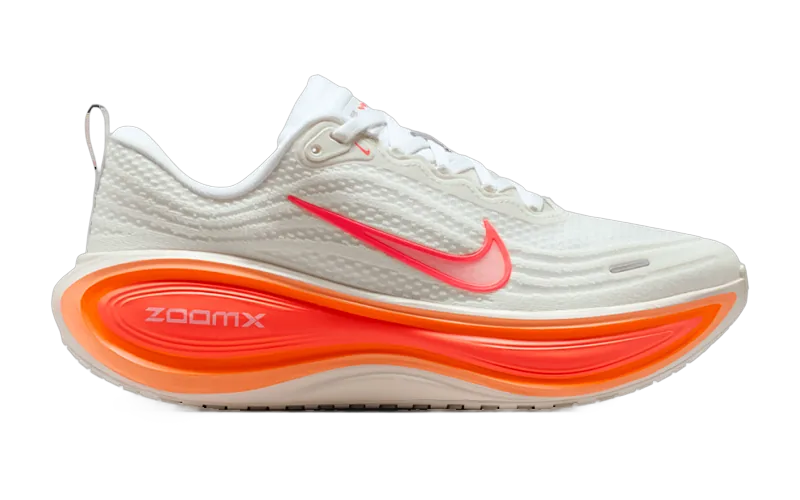 Nike Vomero Plus
- WedWorkout6 milesincl. warm-up and cool-down
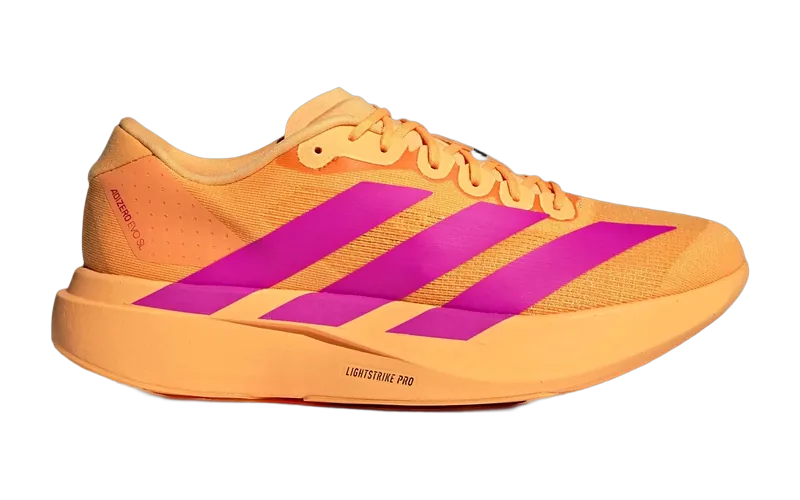 adidas Adizero EVO SL
- ThuRecovery4 milesNike Vomero Plus
- FriRecovery4 milesNike Vomero Plus
- SatRecovery4 milesNike Vomero Plus
- SunLong run10 milesadidas Adizero EVO SL
That gives the Vomero Plus 18 miles and the EVO SL 16. The Vomero Plus appears on three consecutive days, while the EVO SL has a few days between its workout and long run. Both shoes earn their place across the week.
Four shoes: more choice within the same training
Keep the EVO SL for the workout, then give the long run its own shoe and share the recovery runs between two pairs. Here the ASICS Novablast 5 is the everyday trainer, the Vomero Plus is reserved for recovery runs, and the Superblast 3 takes the long run.
- MonRestNo run
- TueRecovery6 miles
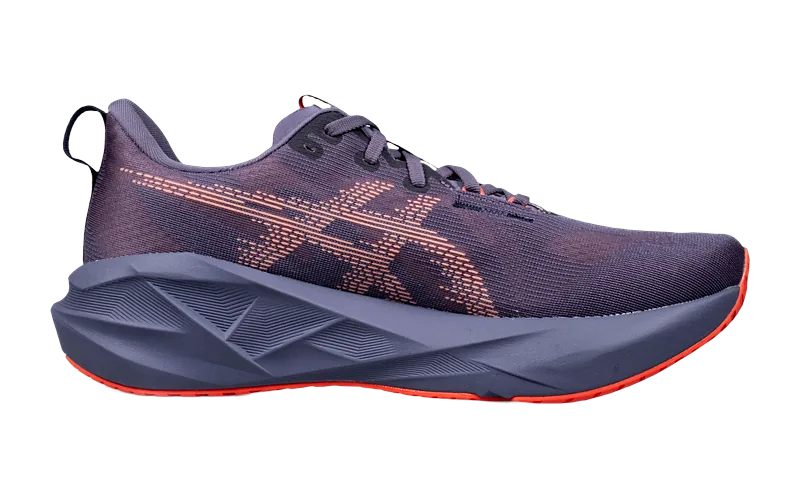 ASICS Novablast 5
- WedWorkout6 milesincl. warm-up and cool-downadidas Adizero EVO SL
- ThuRecovery4 milesNike Vomero Plus
- FriRecovery4 milesASICS Novablast 5
- SatRecovery4 milesNike Vomero Plus
- SunLong run10 milesASICS Superblast 3
What the extra pairs actually change
- Recovery runs can have more than one feel. The Novablast 5 covers ten recovery miles and the Vomero Plus covers eight. They are doing the same kind of session, with a different ride to choose from. You might enjoy that variety, though one preferred pair can cover all four runs.
- The long run has its own option. The Superblast 3 takes Sunday's ten miles. It is worth considering if you prefer its fit or feel for that duration. If the EVO SL already suits your long run, a dedicated pair may add little.
- Each pair gets more time between uses. This four-shoe arrangement changes shoes on every running day. That provides time to dry and a different feel underfoot, without relying on an unproven universal foam-rest rule.
- The wear is spread out. The Vomero goes from 18 miles to eight that week, and the EVO SL from 16 to six. The Novablast and Superblast take ten miles each. Each pair reaches a given mileage later on the calendar. That is not a guarantee of more useful miles from the foam.
- The workout stays the same. Wednesday still uses the EVO SL for the same six miles. The extra pairs have changed the choices around it, not added a better workout to the plan.
Four shoes can make the week more varied and let you choose a preferred feel for each session. It also means buying and maintaining two extra pairs. Choose that setup because you value those differences, rather than because six runs a week demands four shoes.
Choosing what to buy next
- Start with what you already own and notice which runs feel least right.
- Buy for a specific job: a session, a surface or simply alternating.
- Put fit first. Heel hold, midfoot lockdown and room for your toes matter more than headline foam.
- Be honest about budget. Two well-chosen mid-priced pairs can make more sense than one premium shoe, or the other way round.
- Check again as your running changes. A setup that suits a 10km block may not suit marathon training.
Sources
- Malisoux L, et al. Can parallel use of different running shoes decrease running-related injury risk? Scandinavian Journal of Medicine & Science in Sports, 2015. Prospective observational study of 264 recreational runners over 22 weeks.
- Cochrane. Running shoes for preventing lower limb running injuries in adults, 2022. Review of shoe types and injury; not a direct test of rotation.
- Allen et al. Effect of Rest Periods on Mechanical Ageing of Running Shoes, 2020. A small laboratory study. Full paper.
- ASICS. Superblast 3 product page. Brand description of FF LEAP foam and intended use.
- ASICS. Novablast 5 product page.
- Nike. Vomero Plus product page.
- adidas. Official Adizero EVO SL range.
Put your own rotation in order
In Cinda, add the running shoes you own and tell it about your running. You can look at how your rotation covers your sessions, ask which of your shoes suits a planned run, and explore options when you have a specific gap to fill.
If you are new to the app, the introduction to Cinda explains what it does and how to get started.