
When should you replace your running shoes?
Mileage is a useful reminder. Condition, grip and a change in feel tell you more.
Published
Replace your running shoes when wear or a lasting change in how they feel means they no longer do their job. Mileage helps you know when to look more closely, but it cannot make that decision on its own.
A pair with plenty of tread can still feel worn out. Another can look scruffy and remain comfortable. The useful question is whether the cushioning, grip and fit still work for the running you want to do.
What does 300 to 500 miles actually mean?
Brooks gives 300 to 500 miles as the typical life of its performance running shoes. That is roughly 480 to 800km. It is manufacturer guidance, rather than a universal expiry point established for every runner and shoe.
Use the range to plan an inspection and budget for a replacement. Avoid treating 300 miles as an instruction to bin a comfortable pair, or 500 as a target you must reach despite obvious damage. Check any guidance for your particular model as well.
Calendar rules are less useful without knowing the running behind them. At 10 miles a week, 300 miles takes 30 weeks. At 30 miles a week, it takes ten. Those are simple examples of use, not recommended replacement dates. Walking and everyday wear also matter if the same pair does everything.
Look at the whole shoe
Give both shoes a clean, then inspect them together in good light. Brooks lists worn tread, compressed cushioning and damaged upper fabric among its replacement signs. The checks below turn those areas into practical questions.
Work from the upper down to the rubber underneath.
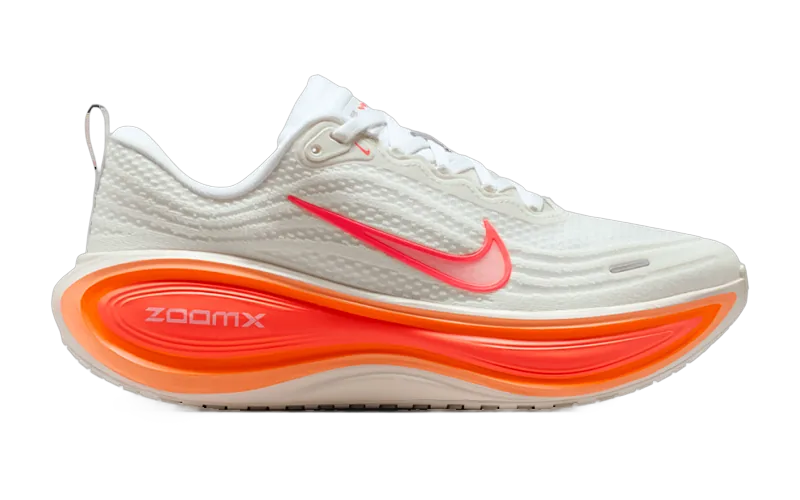
- Upper → hold
- Does the fabric still hold your foot securely?
- Midsole → feel
- Has the cushioning's ride changed on familiar runs?
- Outsole → grip
- Turn the shoe over. Is useful tread left where you need it?
Nike Vomero Plus catalogue image for orientation. Check these areas on your own pair.
Outsole: is there useful grip left?
Look at the rubber underneath, especially the areas you land on and push off from. Is tread disappearing where you need it? Has rubber worn through in a section that originally had it? Some shoes have exposed foam from new, so compare with an original product photograph if you are unsure.
Judge the remaining grip against your route. A trail shoe with rounded lugs might no longer suit the muddy path you bought it for, even if it still feels cushioned. Dirt on the upper tells you much less about that decision.
Midsole: has the ride changed?
The midsole is the cushioning between your foot and the outsole. Notice whether the shoe now feels persistently flatter, harsher or less settled on familiar runs. Look for obvious collapse or a new uneven shape alongside that change in feel.
A crease alone is weak evidence. Brooks describes wrinkles as a natural result of compression over time. Use them as a reason to examine the shoe, rather than a pass-or-fail test. Avoid forcefully twisting shoes to assess their life: Brooks specifically warns that twisting a plated shoe can damage its plate.
Upper: does it still hold your foot?
Check the fabric, heel lining, lace eyelets and the joins between the upper and sole. A small cosmetic scuff is different from a tear that lets your foot move around, or a sole starting to separate. Ask whether normal lacing still gives you the secure fit the shoe used to provide.
Start with the shoe's condition. Use mileage to add context.
- Damage affects grip or fit. Stop using the pair for runs where that damage matters. Replace it, or ask the retailer about an unexpectedly early failure.
- No obvious damage, but the ride has changed. Consider the route and your recent running. If the shoe keeps feeling wrong on familiar runs, plan its replacement.
- Condition and feel remain good. Keep monitoring the pair and record its use. A mileage total alone does not tell you what has worn out.
What if they feel wrong before they look worn?
Take the change seriously without jumping straight to a diagnosis. A hillier route, a harder training week or tired legs can make a familiar run feel different. Write down what changed and which pair you wore. That is more useful than trying to remember a vague impression a month later.
If you already own another comfortable pair, comparing how they feel on similar short runs can help you notice a difference. Two different models naturally feel different, so this is a personal comparison, not a measurement of how much cushioning remains. There is no need to buy a second pair just to conduct the check.
Pain is not a reliable shoe-life gauge. Do not keep running through it to test a theory, or assume a new pair will solve it. The NHS running-injury guidance advises against running in pain and explains when to seek medical help.
Keep a record you will actually use
Record the date you started using a pair and its approximate distance. If you do not know the existing total, an honest estimate is more useful than an invented precise figure. Note substantial walking use separately if it is missing from your running log.
When you inspect the pair, add a sentence about its condition: “heel rubber thinning, still comfortable on the usual route” gives you something to compare next time. A photograph of the outsole can help too. Check again sooner if you notice a change.
In Cinda, you can add distance to the shoes you own and keep track of how much use each pair gets. Its wear estimates provide context for your own inspection; they cannot examine the rubber, fabric or cushioning for you.
Replacing a worn pair also does not oblige you to expand your collection. If one comfortable shoe still covers your running, replace that job. Our guide to running shoe rotations explains when an extra pair can earn its place.
Sources
- Brooks Running. When is it time to replace my shoes? Manufacturer guidance on typical mileage, outsole, midsole and upper wear.
- Brooks Running, European help centre. When is it time to replace my shoes? Compression wrinkles and the warning against twist-testing plated shoes.