
Soft but not wobbly: choosing cushioning and a settled ride
Judge the cushioning and the whole platform as two parts of the same choice.
Published
You can want soft cushioning and a settled ride at the same time. Judge how the foam feels under your foot separately from how securely the whole shoe carries you through a step.
“I like soft shoes, but I don't like feeling wobbly” is a useful preference. It does not mean you must abandon cushioning or immediately buy a shoe labelled stability. It means the cushioning and the platform both belong in your comparison.
What are you actually feeling?
Softness is the yielding sensation as you load the cushioning. Bounce is the springy sensation you may feel as you move out of the step. A settled platform is about feeling secure as you land, move forwards and negotiate ordinary bends. They describe different experiences.
A shoe can feel soft without feeling particularly springy. Another can feel lively without giving you the deep sinking sensation you like. Neither description tells you enough about whether you will feel secure in it.
Upper fit matters too. If your foot slides around inside the shoe, the unsettled feeling may not be coming from the foam alone. Before dismissing a whole cushioning type, establish that the shoe is holding your foot comfortably.
A real example of two things happening together
The Brooks Glycerin 22 makes a useful researched example. Brooks describes its DNA Tuned cushioning as soft and its broad platform as contributing to stable transitions. Those are manufacturer descriptions, rather than measurements or our own wear-test results. They illustrate that softness and platform support can be design aims in the same shoe.
Brooks Glycerin 22: cushioning feel and platform design should be assessed together.
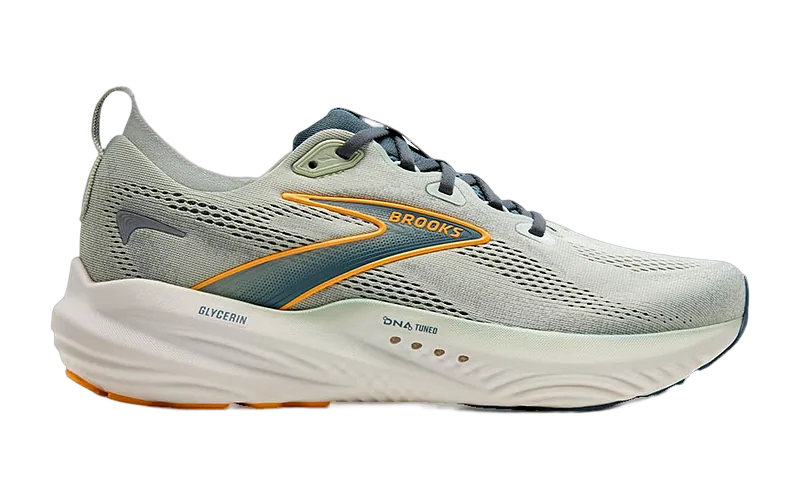
- Cushioning
- Brooks describes soft DNA Tuned foam. Your check: do you enjoy its compression underfoot?
- Platform
- Brooks describes a broad base for stable transitions. Your check: do you feel settled while jogging and changing direction?
The side image identifies the Glycerin 22; it does not measure the base's width. Check the exact version when shopping: Glycerin GTS 22 and Glycerin Max are different shoes.
Try both qualities while moving. You might enjoy the compression underfoot yet still want a different heel hold, or prefer the platform but find the foam too yielding.
Does that mean you need a stability shoe?
A stability label describes the manufacturer's intended support category. It is not a personal diagnosis, and it does not tell you exactly how firm the foam will feel. A shoe without that label can still feel settled to you.
For a preference-led purchase, explain the experience you want: soft underfoot, comfortable heel hold and less side-to-side movement than the pair you disliked. Compare a supportive option if it interests you, but do not assume the label settles the choice.
If you have an existing clinical recommendation, keep that in the discussion with the person fitting you. This article is about choosing a ride you enjoy, rather than prescribing footwear for an injury.
Make the comparison on familiar ground
During a permitted trial, start with relaxed running at your usual effort. Notice whether the shoe feels comfortable in a straight line, then on ordinary gentle bends. Avoid testing it with exaggerated ankle movements in the shop: you are choosing for running, not trying to make every shoe tip.
Keep your socks and intended use consistent between candidates. Describe the result in ordinary language: “soft, but I keep noticing the outside edge” is more informative than deciding the shoe scores badly for stability. There is no universal pass mark to calculate.
If the softest option feels distracting, try a slightly less yielding shoe as well as a different soft design. You may prefer the compromise once you are moving. The winner is the shoe you enjoy running in, rather than the one that feels most luxurious while standing still.
Keep the good part of the old shoe in your brief
Perhaps you loved its cushioning but disliked the hold around the heel. Perhaps the fit was excellent but you wanted more give underfoot. Preserve that distinction when looking for a replacement. Otherwise you can solve the wobble and accidentally lose everything you liked.
Tell Cinda which pair felt too unsettled and what you liked about it. Ask for soft cushioning with a more secure, settled feel, then use the explanation to choose what to try. If the remaining problem is movement inside the upper, our fit guide is the more useful next read.