
Can you race in running shoes over 40mm? Road races, triathlons and IRONMAN explained
The answer depends on the event, the rules it uses and your exact shoe.
Published
For a road race applying World Athletics' shoe regulations, the limit is 40mm. A training shoe over that limit is not a race-day option under those rules. Triathlon has its own rulebooks, but that does not provide a general escape from the limit: World Triathlon follows the road-shoe regulations, and IRONMAN also restricts sole thickness.
The answer for your start line comes from the event's rules and your exact shoe model. Check both before buying a racing pair or packing for an event. This guide uses rules and official event information checked on 28 November 2026.
Does the 40mm rule apply to my race?
The World Athletics regulations effective 20 April 2026 apply to World Rankings Competitions and all athletes competing in them. Appendix 2 sets a 40mm maximum for road running. That scope is broader than professional athletes alone.
| Your event | Starting point | Next check |
|---|---|---|
| Road race applying World Athletics shoe rules | 40mm maximum | Exact model and approval for road running |
| Triathlon under World Triathlon rules | World Athletics road-shoe rules | Current competition rules and event information |
| IRONMAN or IRONMAN 70.3 | IRONMAN rules and athlete guide | Sole thickness, plate restrictions and event updates |
| Another event | Its published rules | Which governing body's equipment rules it adopts |
An event's size, chip timing or relaxed atmosphere does not tell you which equipment rules it uses.
If the entry page leaves you unsure, send the organiser a useful question: “I'm entering the mass-participation race in the ASICS Superblast 3. Is that model permitted in my category?” Include the exact event and shoe version. “Are ASICS allowed?” would leave too much unanswered.
Keep the reply with your entry information. If you are chasing a qualifying result, record or category award, make that part of the question too. We would settle this before the event rather than count on nobody checking.
What does World Athletics actually measure?
Regulations 8.3 and 8.4 measure vertically from the inside surface beneath the foot to the flat ground beneath the shoe. The heel point is 12% along its internal length; the forefoot point is 75%. The standard sockliner is included, and both points must meet the limit.
- Heel: 12%Measure sole thickness at the centre of this position.
- Forefoot: 75%Measure again here. Passing at one point is insufficient.
Drop describes the difference between heel and forefoot height. For an illustrative shoe measuring 45mm at the heel and 39mm at the forefoot, the drop is 6mm. That small difference does not make the whole shoe low.
Approved removable medical orthotics have a separate provision under regulation 6.2 and are excluded from the thickness measurement. If you use one, check the approval requirements. For the shoe itself, use the official Shoe Checker rather than trying to certify it with a ruler.
Two high-stack training shoes that explain the problem
These examples use manufacturer specifications, not our own measurements or a race official's inspection. We chose them because the same distinction is easy to see in both: a forefoot below 40mm does not make a taller heel disappear.
ASICS Superblast 3
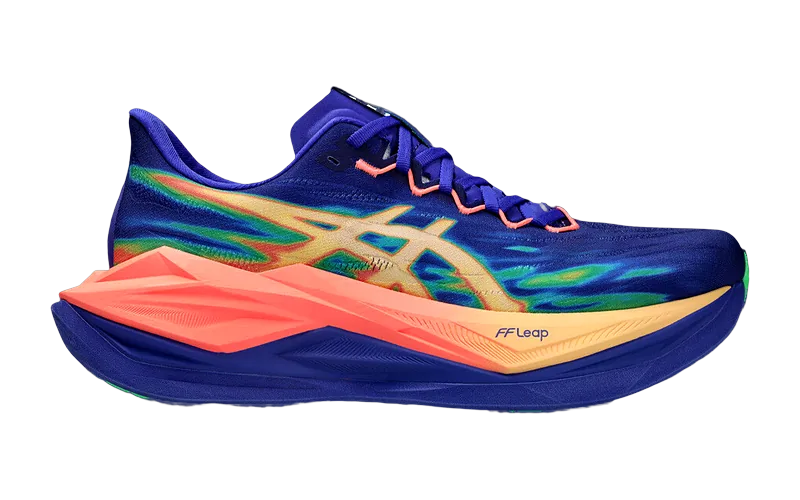
ASICS' launch announcement gives a 46.5mm heel and 38.5mm forefoot. That is an 8mm difference. Our practical advice is to keep a pair with these published dimensions on your training list when preparing for a race requiring a 40mm shoe, and choose a verified race option separately.
adidas Hyperboost Edge
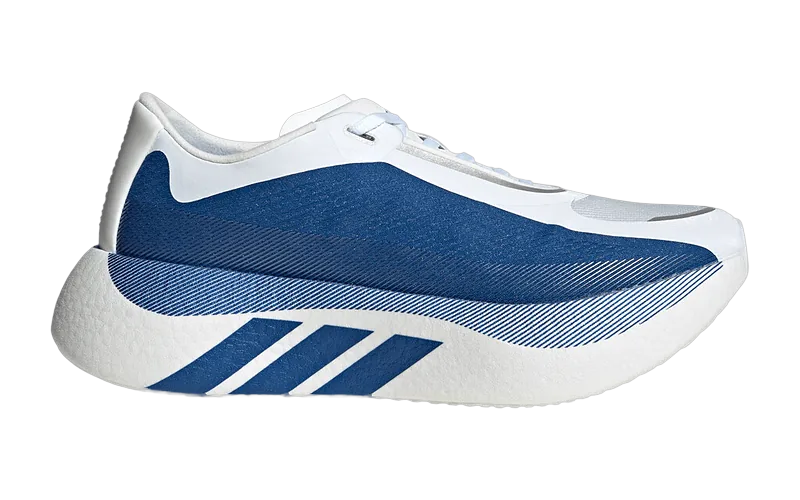
The adidas announcement describes a 45mm rearfoot stack and 6mm drop. It also describes a construction without plates or stiffening elements. That makes it a useful reminder that sole thickness matters even when a shoe has no carbon plate. “Non-plated” is not a race-approval category.
Their published heights are enough to raise the question before entry. They are not a substitute for checking the exact model against the rules that apply to your race.
Do triathlons just follow World Athletics?
World Triathlon has its own competition rules. In the 2026 rulebook, including the April amendments, section 6.4.e(i) adopts World Athletics' shoe regulations applicable to road events. Triathlon therefore has its own governing document while using the road-shoe standard within it.
The same section covers customised and development shoes, with approval requirements and event-specific restrictions. A prototype seen on a professional athlete is a poor shortcut for choosing your own race shoe. Start with an identifiable retail model and check its status.
For a domestic triathlon, check the national federation and organiser named in your entry information. Do not assume that a World Triathlon championship, a local sprint triathlon and an IRONMAN-branded race all use the same document.
What about IRONMAN and IRONMAN 70.3?
The official IRONMAN 70.3 Brasília 2026 athlete guide explicitly prohibits running shoes over 40mm in sole thickness, or containing more than one rigid embedded plate. Its wording addresses IRONMAN races, so moving from a standalone marathon to an IRONMAN run does not make a tall training shoe automatically acceptable.
Read the current IRONMAN competition rules alongside your own event's athlete guide and updates. The Brasília guide provides a clear official example; it is not the briefing for every race on the calendar. Save the relevant pages when you organise your travel and kit.
Choose the racing pair early
Once you have confirmed eligibility, leave time to run in the pair you intend to race in. Permission to wear it answers one question; fit and whether you enjoy the shoe over your planned outing answer another. You may already own a suitable pair, so this need not become a new purchase.
In Cinda, keep the shoes you own together and record the runs each pair is for. That helps separate a much-loved training shoe from a race candidate. Cinda does not certify race legality: make the official rules check for the pair you choose. Our rotation guide explains how those jobs can overlap without needing a shoe for every session.