
Running shoes for wet UK roads: four options worth trying
Four different training needs, with wet-road grip taken seriously.
Published
For wet UK road running, I would start by trying the PUMA Velocity NITRO 4 for everyday miles, the PUMA Deviate NITRO 4 for plated workouts, the PUMA Deviate Pure NITRO for faster running without a plate, and the ASICS GEL-NIMBUS 28 for a plush recovery-run option. The outsole matters, but the pair still needs to fit and feel right on the run you actually do.
This is a researched shortlist, based on model-specific wet-road evidence in Cinda's shoe research, checked against construction details and UK brand listings on 20 October 2026. It is not a Cinda wet-grip test or a ranking of every shoe on sale. It is deliberately PUMA-heavy because these three shoes combine the brand's PUMAGRIP rubber with three useful, different training choices. There are no affiliate links.
What I would look for underneath
Start with rubber compound and where that rubber sits. A road outsole needs useful contact with the road; a chunky-looking tread alone tells you very little about how a shoe will behave on wet paving. Rubber coverage also differs between daily trainers and stripped-back racing shoes, including within one brand.
PUMA describes PUMAGRIP as a rubber compound designed for traction across surfaces. ASICS uses HYBRID ASICSGRIP on the GEL-NIMBUS 28. Those are relevant construction details, rather than proof that either shoe will hold every corner. Water, dirt, the particular surface and the state of your outsole all change the situation.
Choose a shortlist branch by the run and the construction you want. These are editorial choices, not measured grip rankings.
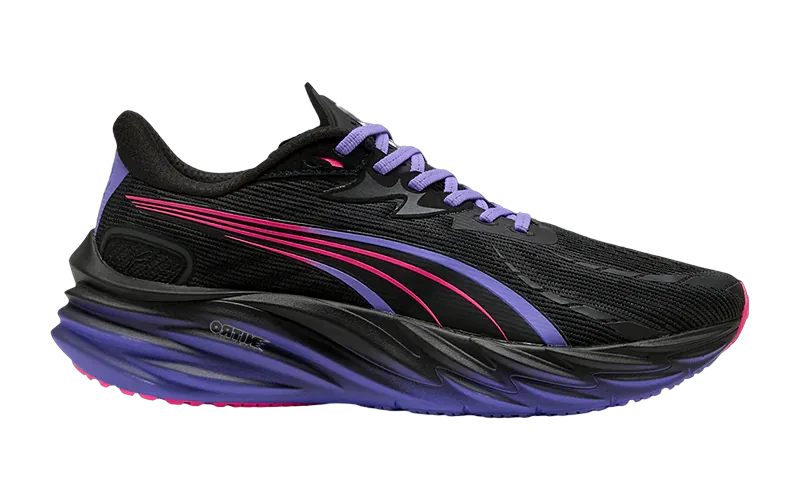 PUMA Velocity NITRO 4
- Everyday road miles
NITROFOAM and PUMAGRIP, without a full-length training plate. 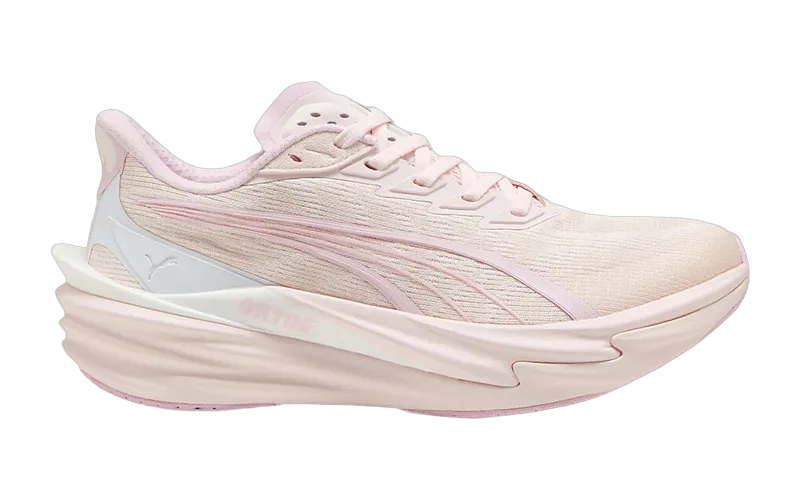 PUMA Deviate NITRO 4
- Workouts with a plated feel
NITROFOAM, carbon-composite PWRPLATE and PUMAGRIP. 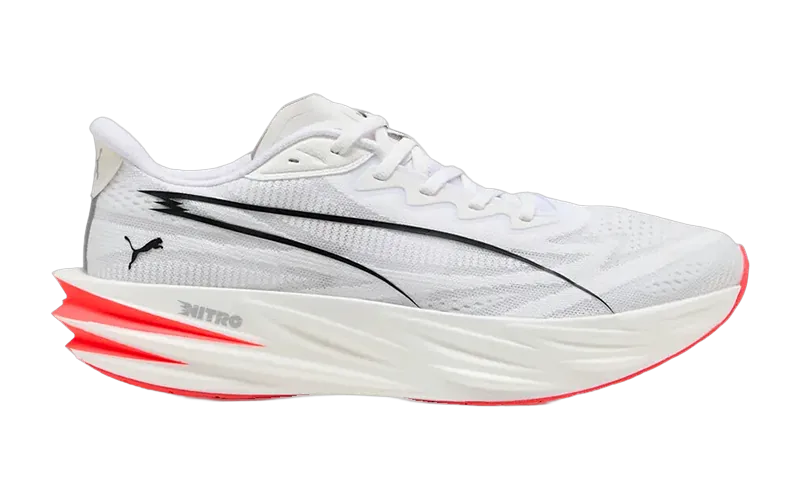 PUMA Deviate Pure NITRO
- Purposeful running without a plate
NITROFOAM and PUMAGRIP; the Pure has no PWRPLATE. 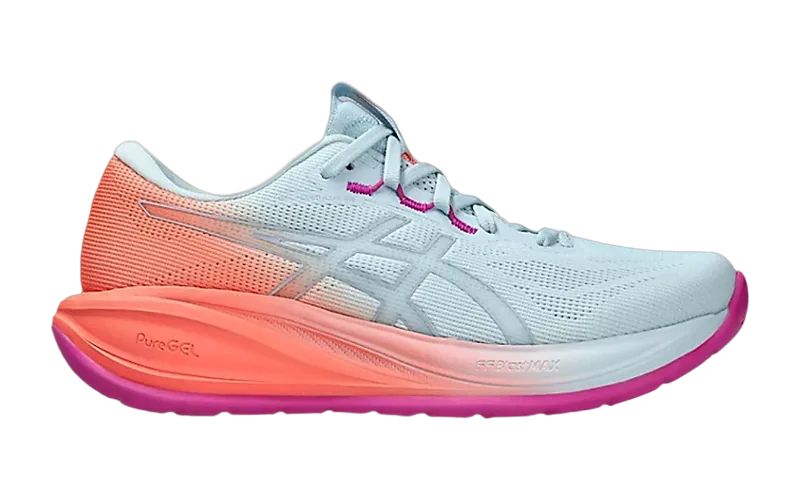 ASICS GEL-NIMBUS 28
- Plush recovery runs
FF BLAST PLUS cushioning, rearfoot PureGEL and HYBRID ASICSGRIP.
PUMA Velocity NITRO 4: the first everyday option to try
The Velocity NITRO 4 has a full-length NITROFOAM midsole and PUMAGRIP outsole. My reason for starting here is its everyday purpose: if most of your winter running is ordinary road mileage, you do not need to buy a racing shoe to get this rubber compound.
Its grounded, relatively firm forefoot is worth noticing if you prefer deep, soft cushioning. Try it at a relaxed pace as well as your usual cruising pace. Check the width through the forefoot and whether your heel stays in place. A shoe you tighten excessively to stop movement is a poor trade for an attractive outsole specification.
PUMA Deviate NITRO 4: for the runner who wants a plate
The standard Deviate NITRO 4 adds a carbon-composite PWRPLATE to NITROFOAM cushioning and PUMAGRIP. PUMA positions it for faster training. It belongs on this list when your wet road run is a tempo session and you already enjoy a plated shoe.
Buy the plate because you like the ride, rather than because you expect it to improve traction. Also check the exact product: the standard Deviate NITRO 4, Deviate NITRO Elite 4 and special editions should not be treated as identical shoes.
PUMA Deviate Pure NITRO: the non-plated alternative
PUMA explicitly describes the Deviate Pure NITRO as a non-plated shoe, with NITROFOAM and PUMAGRIP. This is the option to investigate if you want a shoe for purposeful training but dislike a plate's resistance to bending. It is a separate model, not an informal nickname for the Deviate.
Removing the plate does not establish how flexible the entire shoe feels to you. The foam and shape still matter. Our guide to faster shoes without the stiff plated feel explains what to compare on a try-on.
ASICS GEL-NIMBUS 28: for a softer, calmer run
The GEL-NIMBUS 28 earns its place for a different reason: cushioned recovery runs, with specific wet-pavement support in our model research. ASICS confirms its HYBRID ASICSGRIP outsole and FF BLAST PLUS cushioning. This is the shortlist's comfort-led option rather than its tempo pick.
Try it if you want a settled, rolling ride and a more padded upper. The trade is that it does not have the same light, lively training character as the Pure. Check room above your toes as well as width; a plush lining cannot make an unsuitable shape fit.
What none of these shoes promises
Wet tarmac is not wet road paint, a metal drain cover, algae-covered paving or ice. The general traction claims behind this shortlist do not establish safety on those surfaces. Give slippery-looking patches room, ease your pace before a turn and change the route when conditions make running awkward. A waterproof upper would not solve a traction problem either. Our guide to waterproof running shoes and GORE-TEX treats dry feet as a separate choice.
Check the pair you already own before shopping. Worn rubber, trapped grit and a change in how secure the shoe feels deserve attention; the replacement guide covers those checks. If the route has become muddy, choosing between road and trail shoes is the more useful next decision. In Cinda, start with the shoes in your rotation and the run you have planned, then investigate a gap only if one remains.