
Faster running shoes for people who dislike stiff shoes
What to try when you want a light training shoe and a freer forefoot.
Published
You do not need a full-length plate to buy a light shoe for faster training. If stiff shoes interrupt your stride, start by comparing the PUMA Deviate Pure NITRO, New Balance FuelCell Rebel v5 and adidas Adizero EVO SL. They offer three quite different ways to move beyond a conventional daily trainer, so the useful choice is the feel you prefer rather than the quickest-sounding name.
First, be specific about stiffness. Do you dislike resistance under your toes, a shoe that rolls you forward, or a hard heel counter pressing against your foot? Removing a plate only addresses part of that picture. A thick midsole, the sole's curve and the upper can still make a shoe feel structured.
What should a faster shoe add?
For a tempo run or short intervals, you might want less weight, a more responsive foam or a shoe that feels easier to turn over. Those are reasonable shopping priorities. None requires a carbon plate, and none guarantees a faster time. You also need comfortable fit and enough control for the route and pace.
These are researched choices, using the individual models' construction, Cinda's shoe research and UK brand listings checked on 20 October 2026. We have not run a head-to-head trial of these shoes. The shortlist deliberately separates softness from rebound: a shoe can compress pleasantly without giving the firm springy sensation another runner wants.
Three starting points for a try-on. Each preserves a different priority; none is a measured winner.
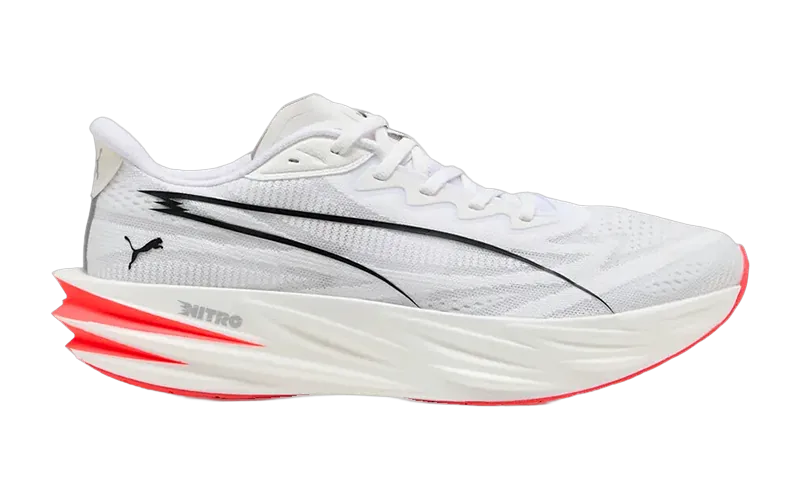 PUMA Deviate Pure NITRO
- Light training with a livelier, more traditional transition.
Compare toe height and support if you are used to a broader shoe. 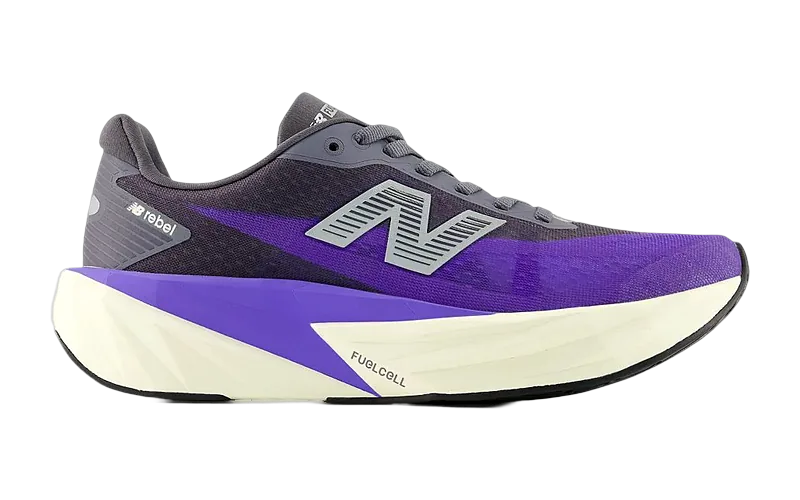 New Balance FuelCell Rebel v5
- A soft, flexible forefoot with generous toe room.
Less suited to someone seeking a firm, snappy platform or prioritising wet grip. 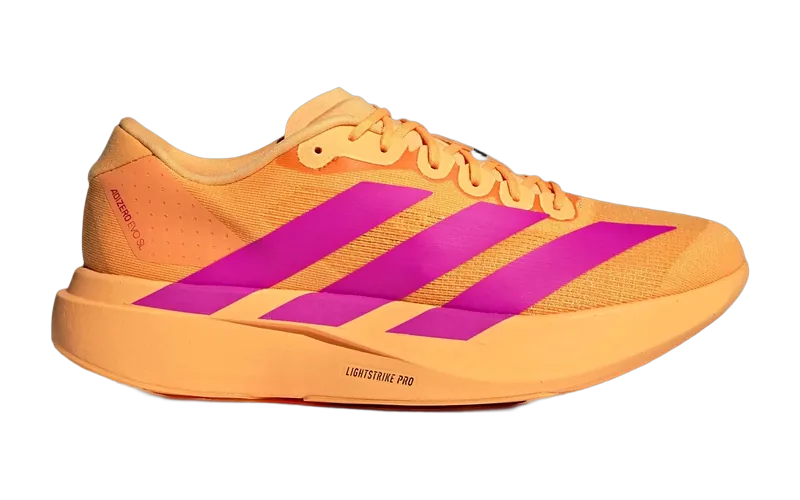 adidas Adizero EVO SL
- A firmer, bouncier training feel with a noticeable rolling shape.
No full-length racing plate, but a small midfoot stiffening element remains.
PUMA Deviate Pure NITRO: start here if you want a traditional transition
PUMA's launch description explicitly identifies the Pure as non-plated. It combines NITROFOAM cushioning with a PUMAGRIP outsole, rather than putting a PWRPLATE through the midsole. The exact model is also listed in PUMA's UK running range.
Our research points to a relatively subtle rocker and a lively ride, making it a useful first comparison if a strongly rolling shoe feels intrusive. The forefoot is roomier than some PUMA models, but the height above the toes is limited. Check that dimension rather than assuming a wide-looking shoe will fit a high-volume foot.
Its moderate platform is another trade-off. If your favourite daily trainer feels broad and planted, try the Pure's control as carefully as its low weight. It earns a look for workouts and steady runs, without needing to replace a comfortable recovery-run shoe.
New Balance FuelCell Rebel v5: choose softness and flexibility
The FuelCell Rebel v5 uses a PEBA/EVA blend, with more foam and a wider, higher midsole than its predecessor. New Balance also redesigned the heel and tongue. Our model research identifies a soft, flexible ride and generous space around the toes.
This is the option I would investigate when bending freely and staying comfortable matter more than a sharp toe-off. Softness is the attraction; someone who finds soft foam vague may prefer the Pure or EVO SL. Wet-road grip is also a reason to compare another model if winter running is the main job. Our wet-road shortlist starts with that requirement.
adidas Adizero EVO SL: no full plate, still a distinct shape
The standard Adizero EVO SL uses Lightstrike Pro foam and Continental and clear-rubber outsole sections. adidas' construction guide describes a small nylon midfoot element. Calling it completely free of stiffening parts would miss that detail.
It is worth trying when you want more spring than the Rebel's softer character and do not mind a visible forefoot curve. Our research also flags a narrow heel platform and less reassuring wet-road manners. A non-plated shoe can still feel demanding if its shape or platform does not suit you.
Make the comparison at your pace
Compare the shoes at a relaxed jog and the pace you intend to use. Notice whether the shoe bends where you expect, whether its rolling shape feels helpful, and whether you feel securely held through a turn. Check the heel counter separately. Do not buy a forefoot solution to a heel-fitting problem.
If you like a current shoe but its successor changed, the replacement guide helps identify what to keep. If you are curious about plated options too, the whole-shoe construction guide explains why the plate alone does not predict the ride. Tell Cinda which qualities you enjoy in your current rotation and the session you want to cover, then use that context to narrow what to try.